Banner for A. J. Windless and Silent Nature
   
   
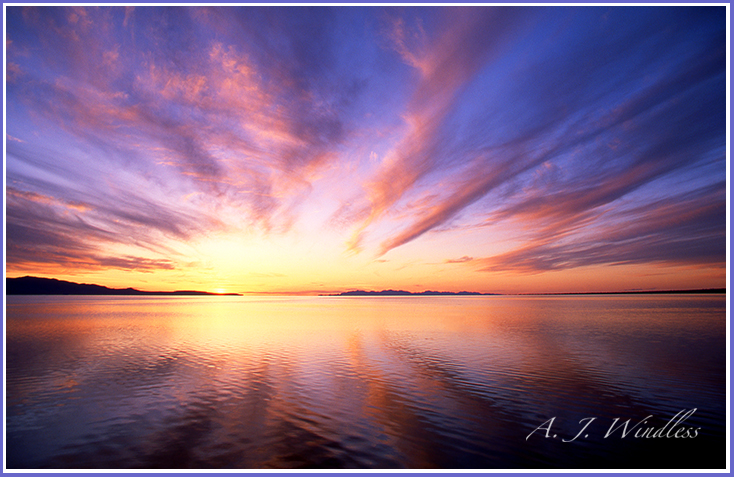
A view of the evaporating Great Salt Lake from Antelope Island.


The Great Salt Lake Crisis


I am thankful that the president has talked about the crisis we are in with the Great Salt Lake. I hope that will raise public awareness of just how bad things really are here. I took the above photo on January 7, 2026 while climbing a hillside on Antelope Island. In the center of the photo, at the base of the mountains you can just barely make out the skyscrapers of downtown Salt Lake City. Notice how much dry ground there is between Antelope Island and the downtown area as the lake seems to be drying up and disappearing.

Let's not allow history to repeat itself. The Aral Sea in central Asia was once the 4th largest fresh water lake in the world. The Soviets saw cotton as "white gold" and robbed the sea of its river water so that they could grow cotton in the desert. I will post before and after pictures of the Aral Sea. Our lake is now quickly heading toward that same calamity.

The Great Salt Lake has a tremendous impact on the entire ecosystem of this area. Most of the moisture that hits Salt Lake City rides in on the jet streams from the Pacific northwest, and as the storms pass over the Great Salt Lake they are frequently intensified by the "lake effect" causing them to release more than a normal amount of rain and snow when they hit the Wasatch Mountains. Having traveled and photographed extensively throughout the west, I believe that the canyons southeast of Salt Lake City are the richest, greenest canyons anywhere in the intermountain area. But the more the lake shrinks the more that lake effect weakens and we stand to see smaller snowpacks and drier canyons, accelerating both our water shortage and the disappearance of the Great Salt Lake.

Already the massively exposed dry beds of the lake are creating a serious health hazard. As our water comes out of the mountains it is full of minerals, which in their natural proportions are quite safe, even to drink, but for thousands of years that water has been evaporating and depositing those minerals at the bottom of the Great Salt Lake. Now everytime winds blow in from the northwest across the exposed dry beds that you see in the photo above, they pick up unsafe levels of arsenic and other dangerous minerals, fanning them into the city and surrounding areas. I have had constant sinus irritations since I arrived back in Utah. I do have allergies, but why during seasons of low pollen count do my sinuses sometimes get much worse?

With these kinds of hazards already developing, why are we bringing AI data centers to Utah? It seems to me that history is repeating itself. The Soviets saw cotton as the "white gold" but the devastation was that it takes over 700 gallons of water to produce one cotton T-shirt. It seems to me they should have grown that cotton in enviroments that had more water to give rather than in the dry ecosystem around the Aral Sea. In like fashion, researchers estimate that each 100 word e-mail generated by an AI chatbot requires more than a full bottle of water to cool the computers. Does Utah have that much water to spare? It seems to me that an industry that uses that much water would be much more appropriate in a wetter enviroment. Utah needs to find its cash cow from other more appropriate sources.

We now have over 3 million people in the state of Utah. Most of those people live along the Wasatch Front where they use the water coming out of the mountains before it reaches the Great Salt Lake. Water used for showers and dishes at least goes down the drain and some of it may eventually reach the lake, but most of the water that we use goes into our lawns and strongly contributes to the strangulation of the lake. I have read comments where people claim that grass puts moisture in the air and creates rain, and that if their lawns weren't there the problem would be much worse. To me that sounds like an exaggerated rationalization. Much more water is being diverted to grow that grass than what it is giving back, and the Great Salt Lake has survived for 8,000 years without the help of our lawns. I am told that one guy who replaced his grass with alternative landscaping was fined by his city for breaking zoning ordinances. The good news is that at least some of the cities along the Wasatch Front are encouraging alternative landscaping, and in some cases are even paying people to replace their lawns with more water conservative landscapes.

We all need to do what we can to save this marvelous lake and an enviroment around it that we can safely live in. Let's stop bringing AI centers into Utah. House Bill 76 requires that AI centers report their water usage, but the bill also includes a clause that does not allow the public access to that information. At a bottle of water for every 100 words, I can see why. The public outcry would be so loud that every data center in Utah would be stopped dead in its tracks. Let's also do what we can to conserve water in and outside of our homes. Make sure your city has laws that are favorable to alternative landscaping rather than zoning penalties that prevent water conservation.

Below are the before and after photos of the Aral Sea. Let's prevent an after picture of the Great Salt Lake that looks like the one below. Over the years I have written three other articles about the lake in crisis, each with a beautiful photo, so I will include those links here:
The Road to the Lake
When She Still Had Water
What Once Was


Photo showing the size of the Aral Sea prior to Soviet exploitation for cotton growing.


The Aral Sea Before the Soviet Cotton Project
   
         
    A photo of the Aral Sea after the Soviet cotton growing project.    
         
   
The Aral Sea Today


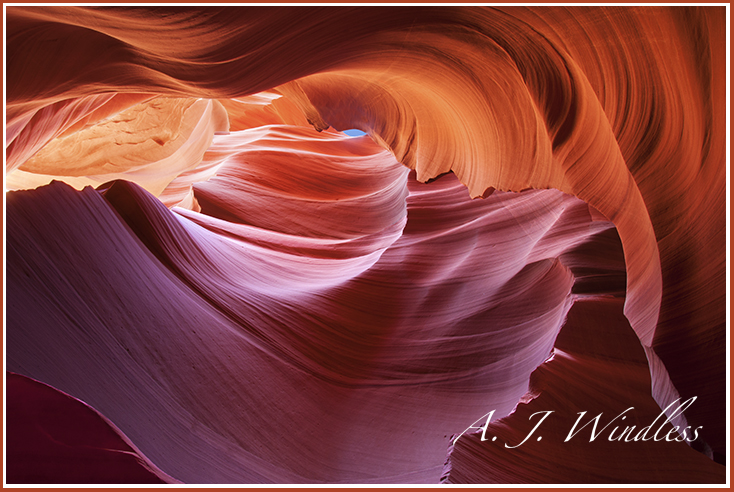
A small piece of blue sky high above me in a stunning slot canyon.


My Photo Galleries


  What's New?   My Blog  
  My True Stories   My Songwriting  
My Poetry My Chess Story
  My Alaskan Malamute   My Engdangered Dove  
  My Running Story   About the Artist  


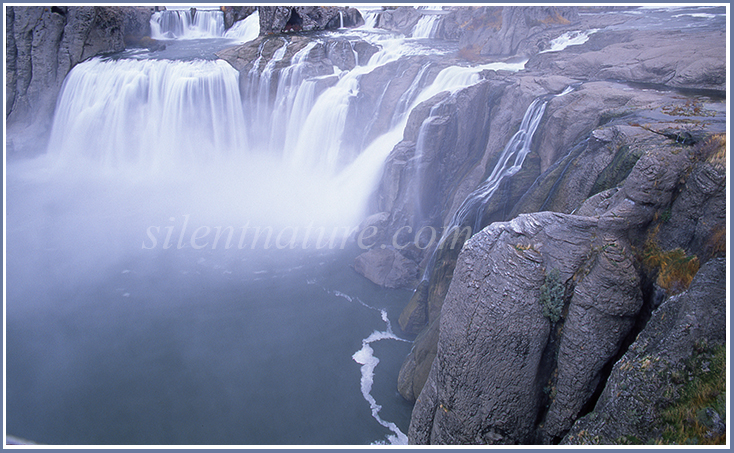
Beautiful waterfall demonstrates how silent nature is.


Silent Nature


A testimonial of how good my photos are.
   
         
    contact    
         
© 2026 silentnature.com